Sacred sites that didn't move, and the people who could no longer reach them.
The Partition of British India in 1947 is most often told as a story of people who moved: refugees, deaths, migrations. Severed tells it differently. With photograph permissions from Pakistani and Sikh-American documentarians of these sites, it is a map of sacred sites that did not move—sites whose worshippers were left on the wrong side of the new borders.
Twenty-eight places. Five religious traditions. Three modern nations. One drawn line, with consequences that have lasted seventy-eight years.
Some of these sites have reopened, partially, through diplomatic gesture. Most have not. Some have been destroyed. Some sit ten kilometres from a militarized border and are unreachable from the country whose script they gave the language a name in. Some are visited every week by tens of thousands of people on one side and almost no one from the other. The map below shows them all.

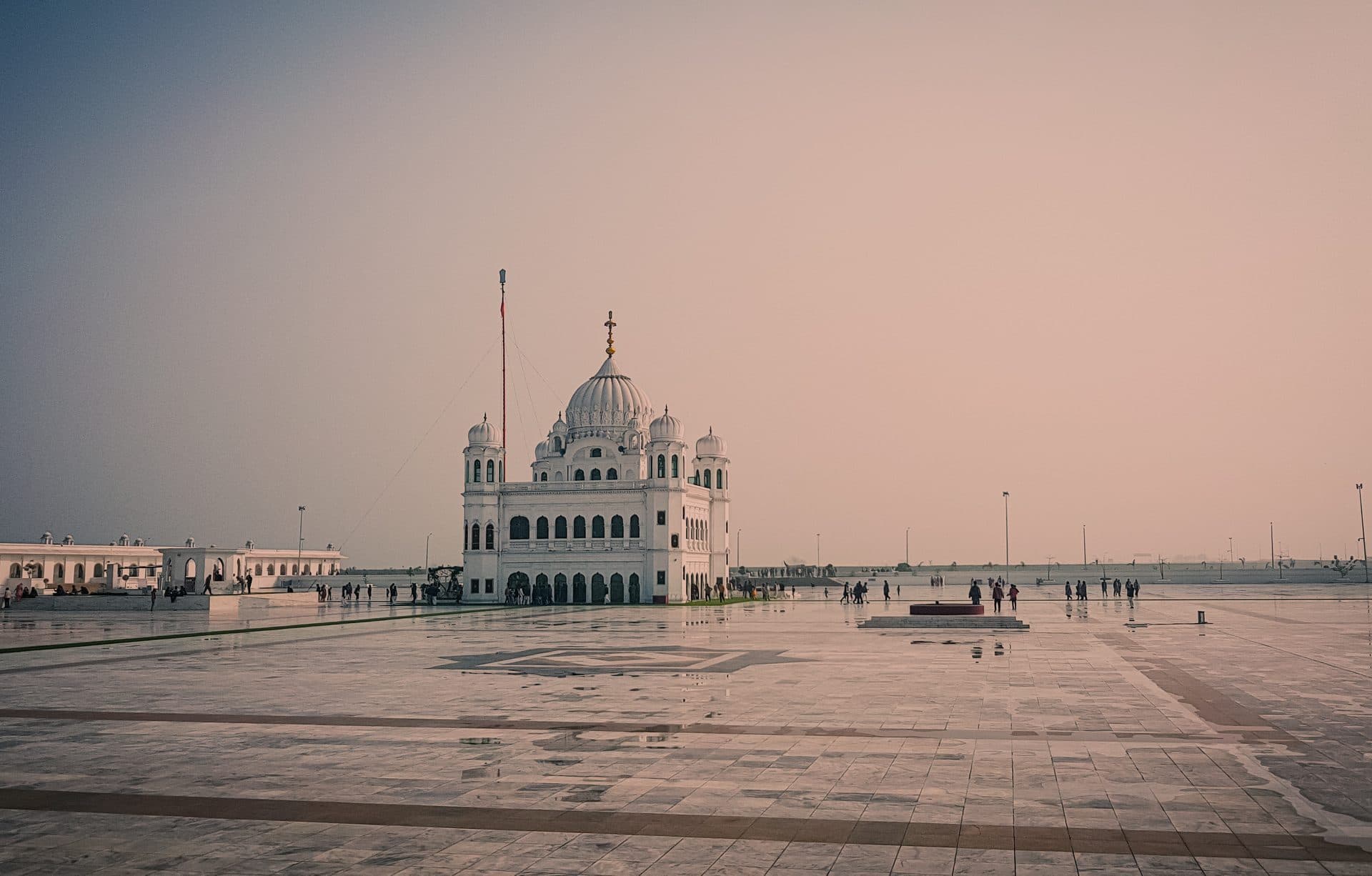
Where Guru Nanak spent the last 18 years of his life and died in 1539. The site holds both a samadh and a grave, marking the resolution of a dispute between his Hindu and Muslim devotees over his last rites. Abandoned in 1947, briefly fell to smugglers in the 1980s, and finally reopened to Indian Sikh pilgrims via a visa-free corridor in November 2019 — the only such corridor across the partition line.
Read the full page →From Sikh gurdwaras in West Punjab to Hindu Shakti Peethas in Balochistan; from a Buddhist learning centre near Islamabad to a Sufi shrine in Rajasthan whose Pakistani pilgrims are increasingly denied visas. The map includes severance in both directions, across five religious traditions and three modern countries.
Severed is a deliberately limited project. It is not a comprehensive partition history. It is not an oral history archive. It does not assign blame to any modern state. It documents one specific kind of cultural loss—the phantom-amputation of religious geographies from religious communities—across one analytically chosen list of sites.
The methodology page explains the inclusion criteria, sources, limits, and the author's own position relative to the material.
Read the methodology →Severed is published as part of Thoughtful India's broader work on the cultural, intellectual, and political history of the subcontinent. The project is hosted by Thoughtful India and was researched and written by Maya Sharma.
More about the project →