Gurdwara Darbar Sahib Kartarpur
also: Kartarpur Sahib
Kartarpur, Narowal District, Punjab, Pakistan
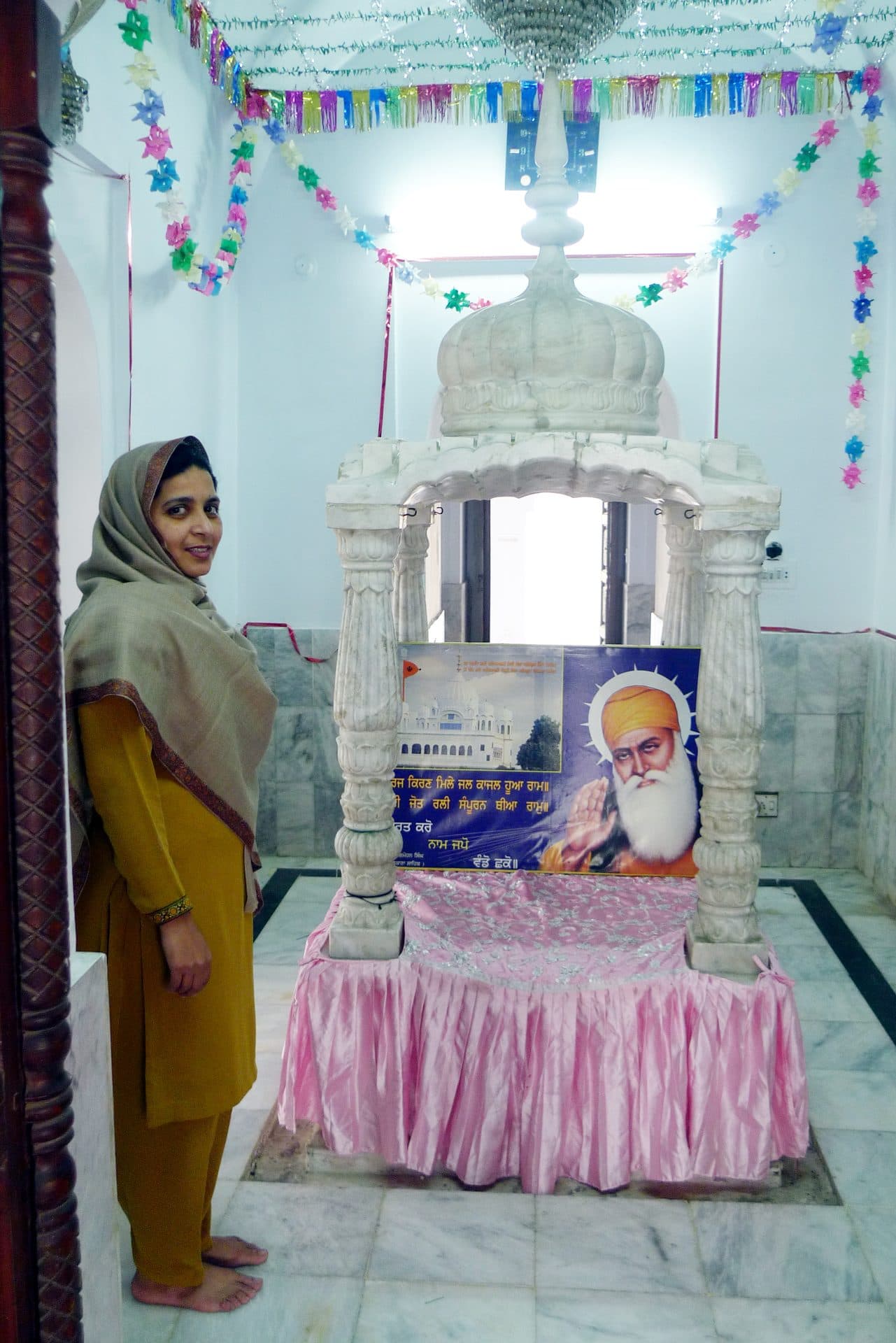
Guru Nanak founded Kartarpur in 1515. He spent the last eighteen years of his life on the western bank of the Ravi River, cultivating land, preaching, refining what would become the three pillars of Sikhism — kirat karo, vand chhako, naam japo. When he died on September 22, 1539, his Hindu and Muslim devotees argued over what to do with the body. The Hindus wanted to cremate him; the Muslims wanted to bury him. According to Sikh tradition the dispute was resolved by Nanak himself, who appeared to his followers and asked them to postpone the decision until morning. When they returned, only flowers remained beneath the shroud. The Hindus took half and burned them. The Muslims took half and buried them. To this day, Gurdwara Darbar Sahib Kartarpur contains both a samadh and a grave, a few meters apart.[^1] It is possibly the only major religious site in the world that holds both at the same time — a literal architecture of the syncretism Nanak preached.
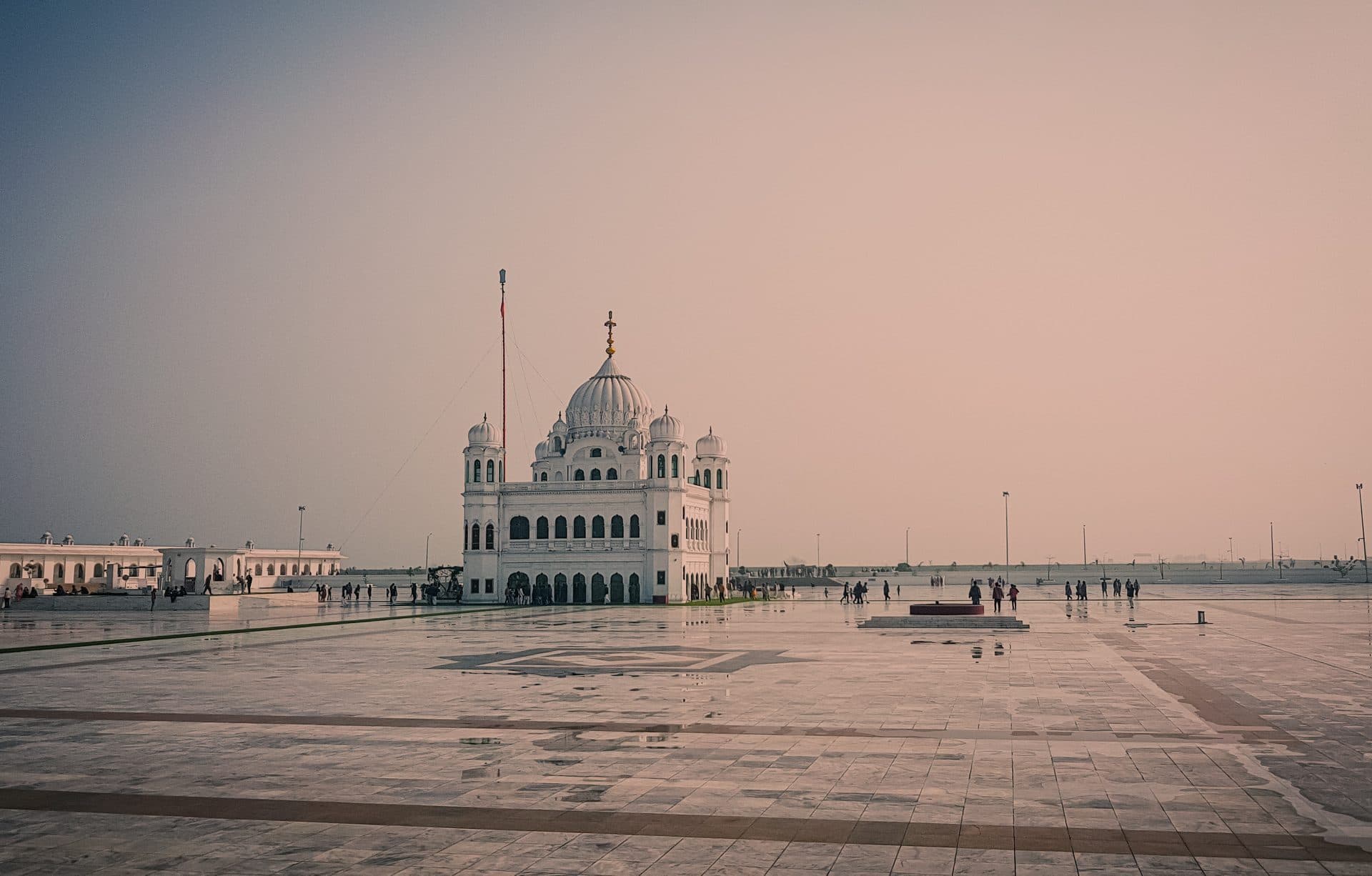
Two centuries later the Ravi changed course and washed away the original abode. Maharaja Ranjit Singh built the present marble structure in the early nineteenth century.[^2] By the early twentieth century Kartarpur had become a thriving Sikh village; pilgrims came from across Punjab, often on foot.
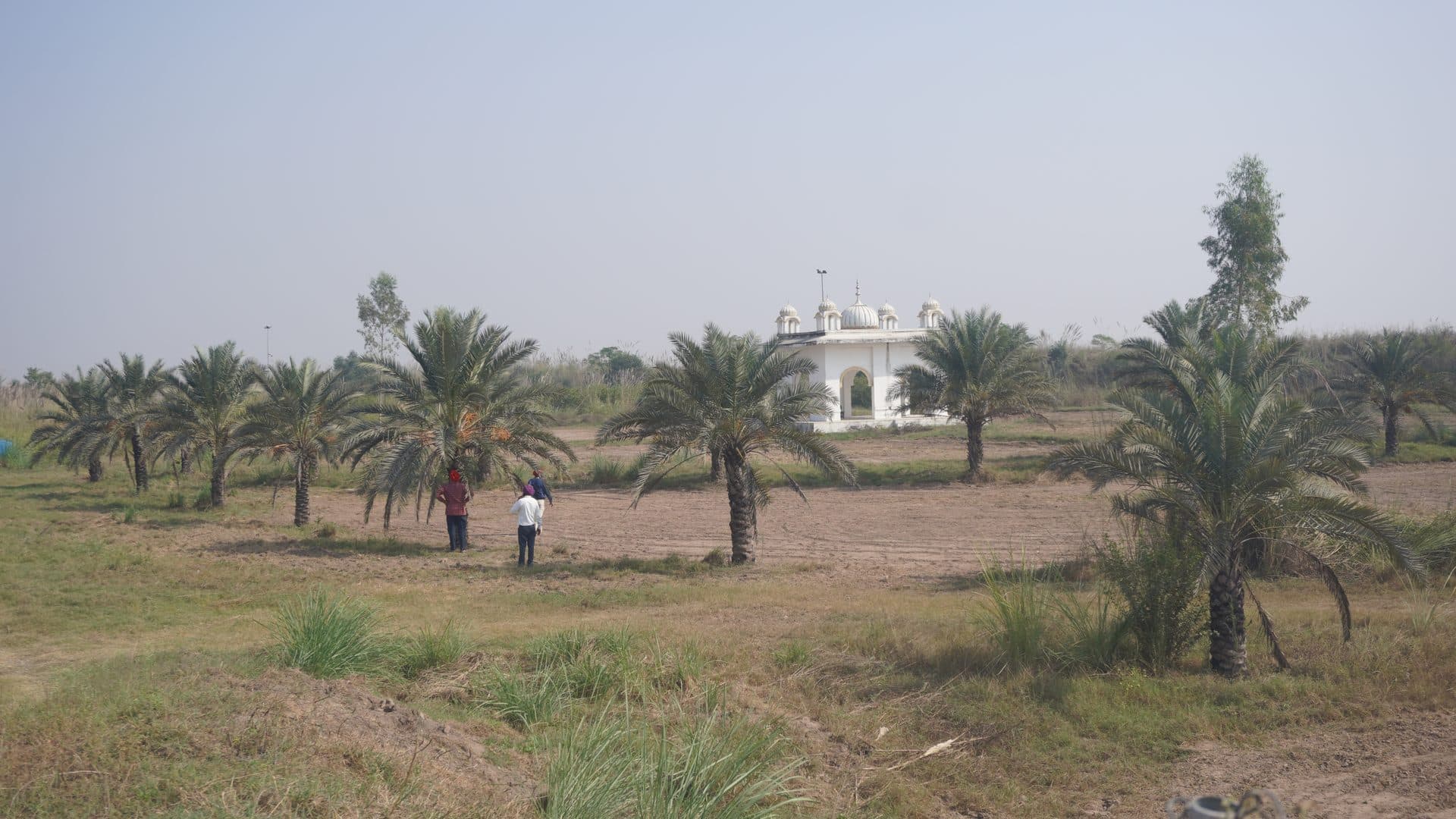
Then in August 1947 Cyril Radcliffe drew his line. Kartarpur fell three kilometers to the west of it. The Sikh community migrated almost entirely to the Indian side — most of them to Dera Baba Nanak, the town founded by Nanak's father-in-law that now sits across the river from the gurdwara. For more than seventy years afterward, Sikhs on the Indian side could see the white dome of Kartarpur Sahib with binoculars from a viewing platform — the darshan sthan — but could not legally walk the three kilometers to reach it. The journey by land required a 125-kilometer detour through Lahore, a Pakistani visa, and weeks of bureaucracy. Most Sikhs in Indian Punjab never made it in their lifetimes.
The shrine itself, abandoned on the Pakistani side, did not fare much better. By the 1980s it had become derelict; the surrounding fields fell under the informal control of cross-border smugglers, who used the route through Kartarpur during the years that heroin flowed through General Zia-ul-Haq's Pakistan. Drug addicts slept inside the gurdwara. The Pakistani writer Haroon Khalid, who has documented these gurdwaras across Punjab, notes that even through these decades a small number of local Muslim devotees — descendants of Nanak's own Muslim followers — continued to visit the grave outside the main shrine and leave offerings.[^3] The Sikhs had left. The Muslims who had buried his flowers had not.
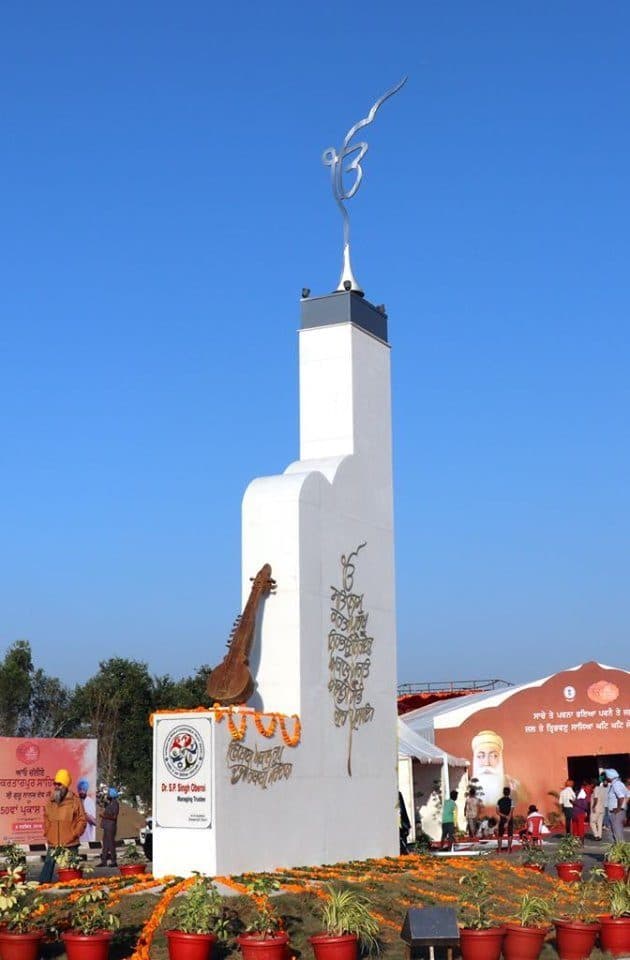
The corridor that now connects Dera Baba Nanak to Kartarpur Sahib was proposed in 1998 and ignored for twenty years. It finally opened on November 9, 2019, timed to the 550th birth anniversary of Guru Nanak.[^4] Imran Khan called it "opening our hearts to Sikhs." Narendra Modi compared it to the fall of the Berlin Wall. The agreement allowed up to 5,000 Indian pilgrims to cross daily, visa-free, with only a passport and an online permit. Pakistan levied a twenty-dollar service charge per pilgrim that India has formally objected to but never refused to pay.
The corridor was closed during the pandemic, reopened in November 2021, and renewed in 2024 for another five years through 2029.[^5] More than 110,000 Indian pilgrims have used it. Sporadic closures still occur — most recently in May 2025, without public explanation. Pakistani Sikhs, a community of fewer than 20,000 people, still require Indian visas to make the reverse pilgrimage to Dera Baba Nanak.
What Kartarpur represents in the wider story of partition is not closure but a particular kind of asymmetry. The corridor is real and remarkable. It is also, for the rest of partition's severed geography, conspicuously alone. There is no equivalent for Sharada Peeth, ten kilometers from the Line of Control in Kashmir; no equivalent for Hinglaj in Balochistan; no equivalent for the Sufi shrines on either side whose pilgrims now apply for visas that are increasingly refused. Kartarpur is what happens when the two governments decide, briefly, that a particular wound can be salved. For everything else, the wound stays open.
“It is possibly the only major religious site in the world that holds both a samadh and a grave at the same time — a literal architecture of the syncretism Nanak preached.